
Sustainability initiatives
Basic concept
Based on our Purpose—Building a Better Tomorrow with Environmental Technologies—the Group identifies sustainability as the core of its management strategies and strives to resolve various environmental and social issues through our business activities, while also increasing corporate value. Together with our stakeholders, we promote responses to environmental issues, particularly those with pressing social consequences, while also striving to achieve sustained growth and social value creation.
To realize our long-term vision for 2030, we have established KPIs for each of the five materiality issues identified and are promoting sustainability management through the steadfast implementation of priority measures and progress control.
Sustainability promotion structure
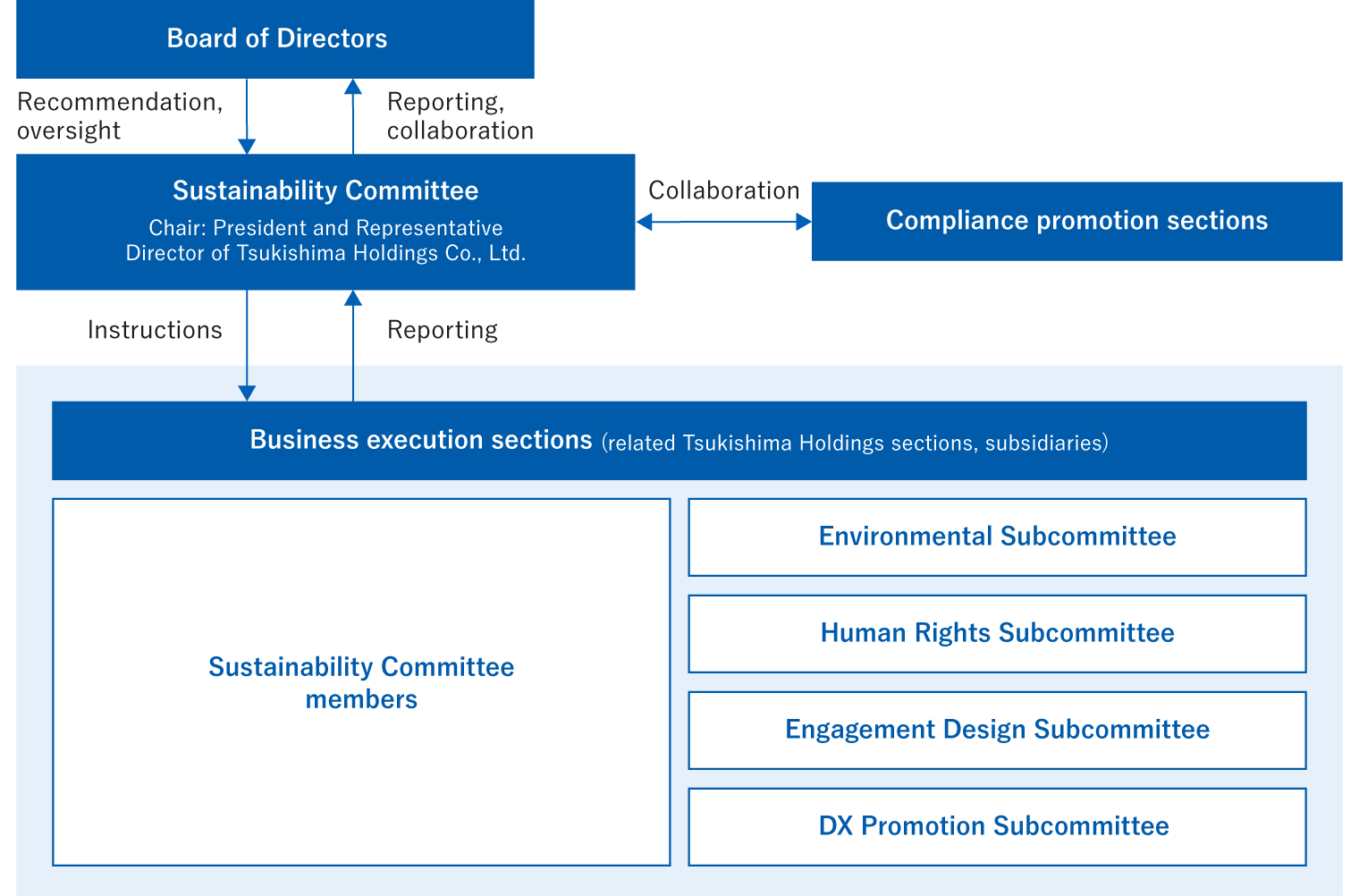
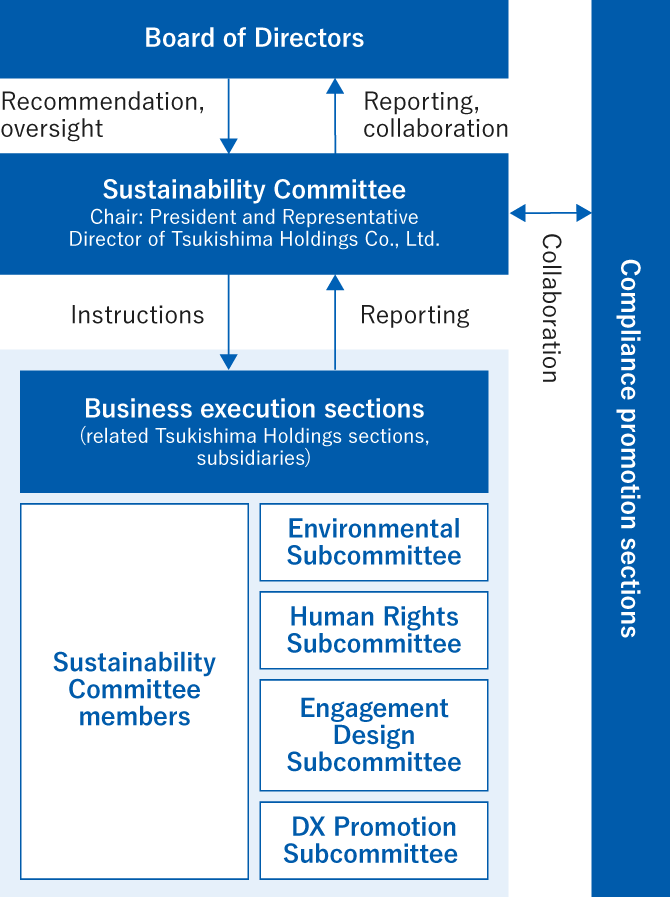
Having established a Sustainability Committee chaired by the President and Representative Director, we are currently implementing Groupwide activities to address sustainability materialities under the oversight of the Board of Directors. Related sections and Group companies examine and deploy specific measures. The Environmental Subcommittee, Human Rights Subcommittee, Engagement Design Subcommittee, and DX Promotion Subcommittee have been established under the Sustainability Committee to consider issues that must be addressed Groupwide.
Details of these activities are reported through the secretariat to the Sustainability Committee for reflection in Groupwide measures following deliberations and decision-making. Results of Sustainability Committee deliberations and activity status are reported to the Board of Directors for oversight and review. We seek to reflect the perspectives of multiple stakeholders by engaging in discussions with outside experts as needed.
Process of identifying materiality issues
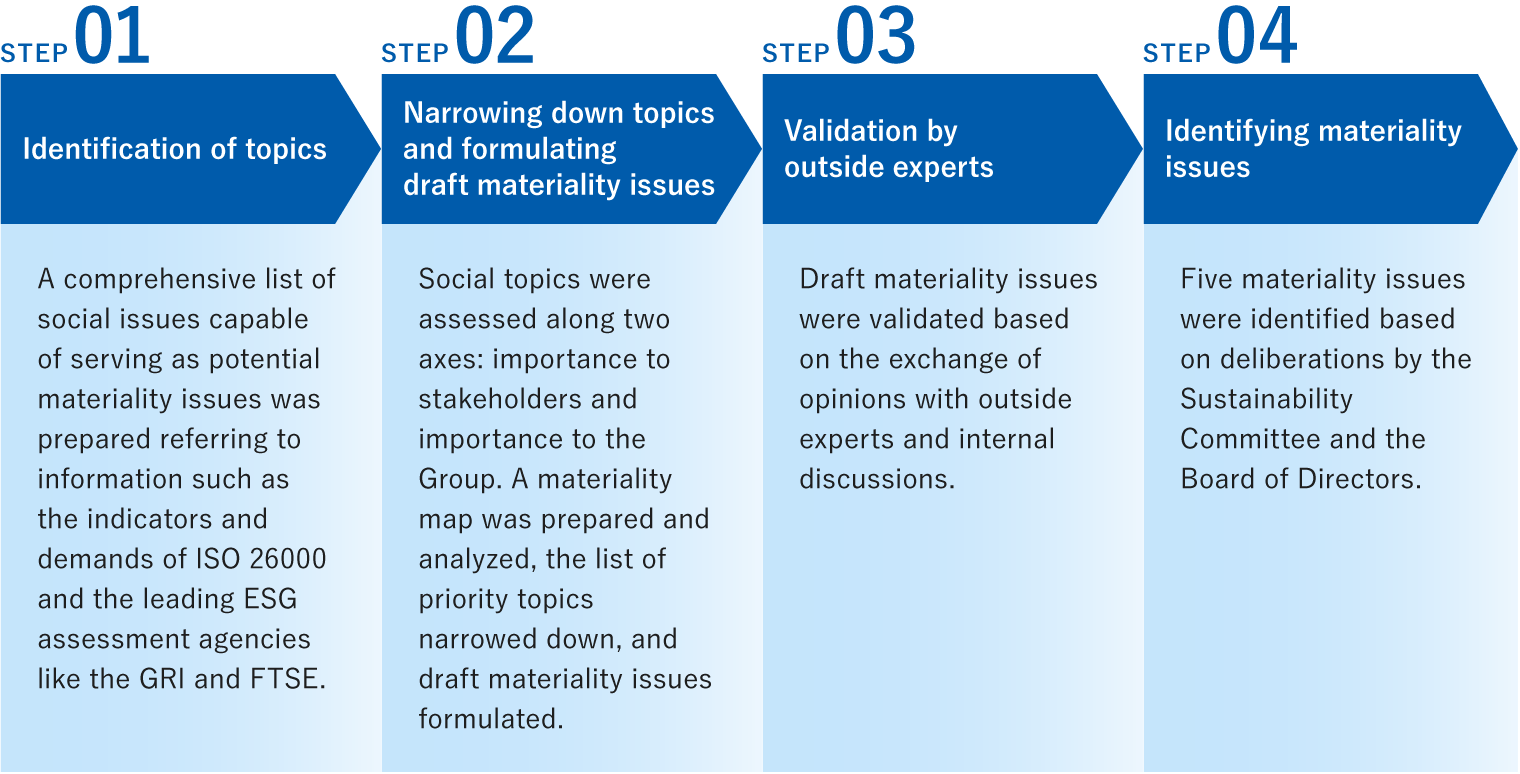
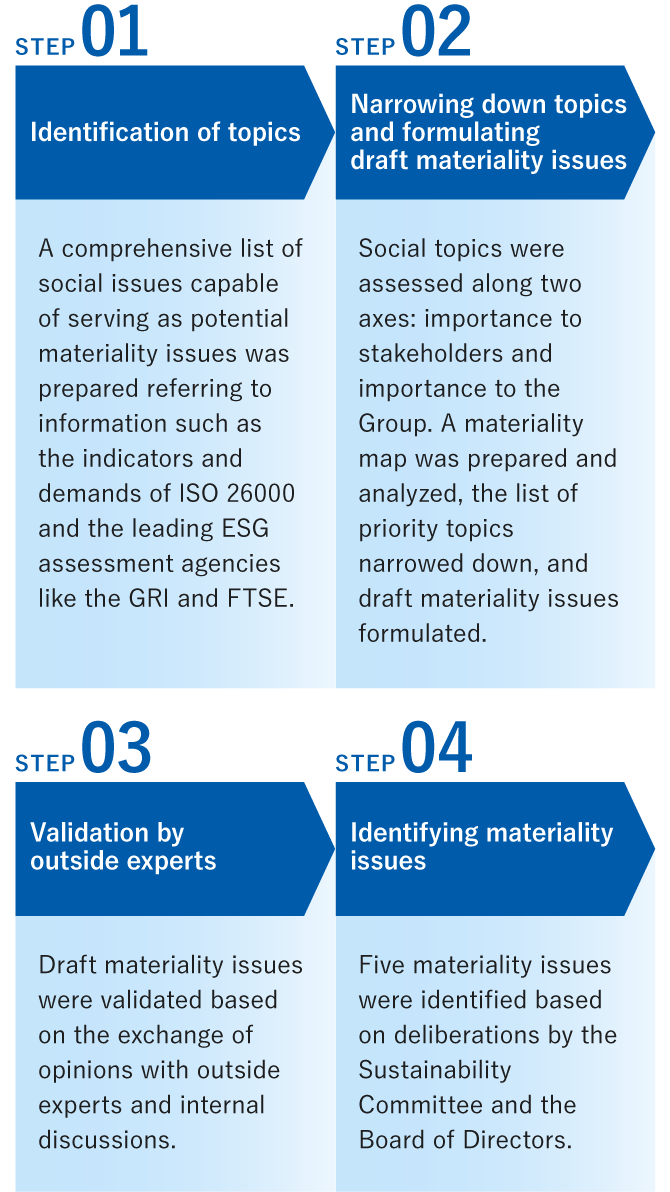
The Group’s materiality issues were identified through the following four steps. In Step 1, indicators and other materials from the leading ESG assessment agencies were referred to in identifying topics. In Step 2, these were narrowed down and materiality issues proposed through dialogue with stakeholders. In Steps 3 and 4, the final materiality issues were selected based on deliberations by the Sustainability Committee and Board of Directors.
Materiality issues, priority measures, and KPIs
Materiality
Ⅰ.Contributing to a decarbonized society

Priority measures
- Expanding the deployment and use of waste-to-energy incineration systems
- Generating energy from sewer sludge
- Technological initiatives accompanying efforts to promote EVs
- GX initiatives
- Greenhouse gas reduction (reducing Scope 1 and 2 emissions)
Materiality
Ⅱ.Sustainable use of resources
Priority measures
- Enhancing R&D in environmental businesses
- Advancing technologies for environmental protection
- Recovering valuable materials
- Boosting orders received for overseas industrial infrastructures
Materiality
Ⅲ.Contributing to a comfortable and sustainable society

Priority measures
- Boosting comprehensive orders for water supply, sewage facilities, and related services, promoting DX in maintenance and management, enhancing capacity to respond to natural disasters
- Contributing to water safety and water infrastructure promotion and development efforts overseas
- Social contribution activities
Materiality
Ⅳ.Attractive, rewarding working environments


Priority measures
- Promoting respect for human rights, diversity, and inclusivity
- Hiring and developing diverse human resources
- Promoting occupational health and safety and health management
- Resolving labor and human rights issues along the supply chain
Materiality
Ⅴ.Developing a governance
structure to realize sustainability management
Priority measures
- Establishing and promoting a Sustainability Committee
- Appointing Directors and Corporate Auditors from diverse backgrounds
- Addressing climate change risks
- Securing and utilizing intellectual property
Most important KPIs
Sales ratio of
businesses that
contribute to a
decarbonized society
- Water Environment Business
- 20% or more
- Industrial Business
- 20% or more
FY 2025
results
- 38%
- 42%
Scope1 and 2
Establish roadmap for
reduction of
greenhouse gas emissions
Scope3
Calculate and
disclose by 2026
Formulation of roadmap to zero GHG emissions completed
544 thousand
t-CO₂/year
R&D expenses that
contribute to
a decarbonized
society
- 30% or more
- 35%
Promoting respect for
diversity
(FY2026 targets)
- Ratio of women managers
(Tsukishima Holdings
standards) - 6% or more
- Utilization ratio of men
childcare leave programs - 100%
- Ratio of women on
board of
directors - 15% or more
- 5.9%
- 100%
- 9.1%
Human Resources Data
|
Items (Subjects: |
Ratio (%) (as of the end |
Share of women in |
15.3% |
|---|---|
|
Share of women in |
10.9% |