
Risk Management
Risk management structure
The Group has established the Tsukishima Holdings Group Risk Management Regulations to manage risks of loss. In the event of a crisis, the Crisis Management Committee, chaired by the President and Representative Director, is responsible for managing the crisis. The Crisis Management Committee Secretariat, a permanent body comprising the General Affairs Department and other relevant departments, is also responsible for taking the necessary crisis management actions. Under normal circumstances, the compliance promotion departments analyze risks and collect and manage risk-related information, reporting to management as necessary.
Climate-related risks and human capital-related risks approved by the Sustainability Committee are shared with the compliance promotion departments. These risks are integrated with other Company-wide risks, and risks identified as particularly material to the Group’s businesses are reported to the Board of Directors.
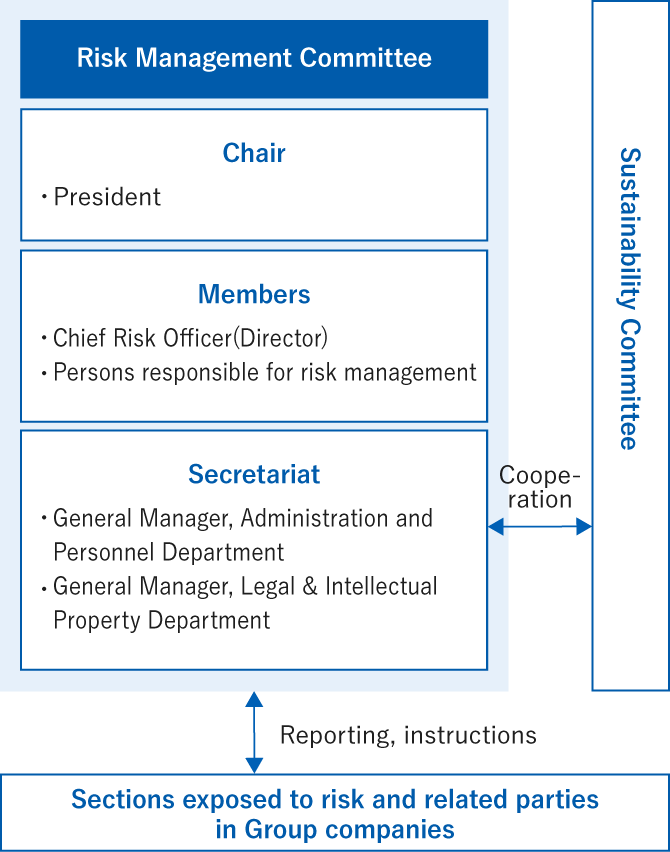
Risk management structure
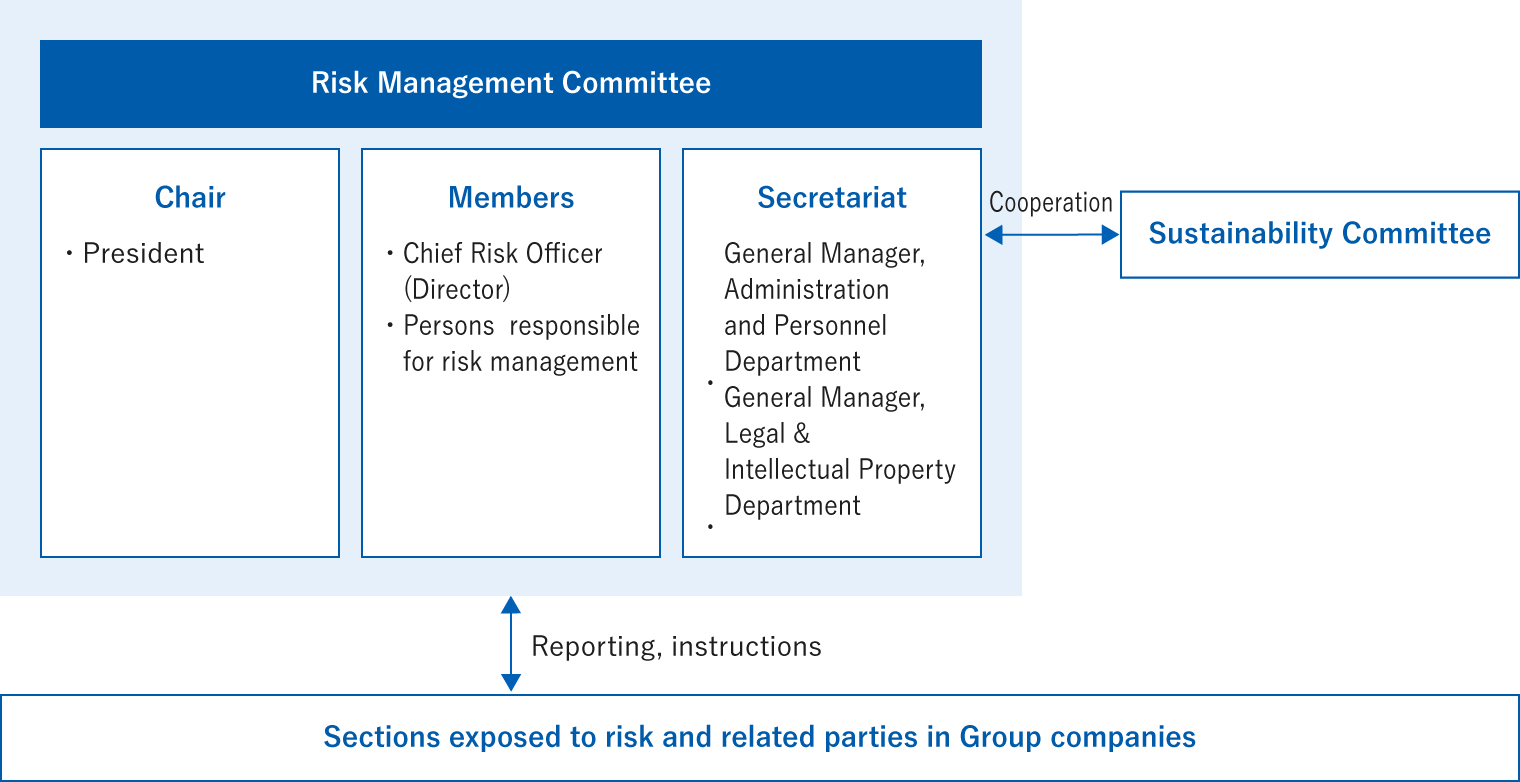
Responding to major emergencies
In case the President, Representative Director of Tsukishima Holdings determines that a major emergency* has occurred, forms a response task force, and serves as its general manager.
* Circumstances in which we require responses by the Group as a whole or we provide information on how the event occurred and related Company policies to the media or others
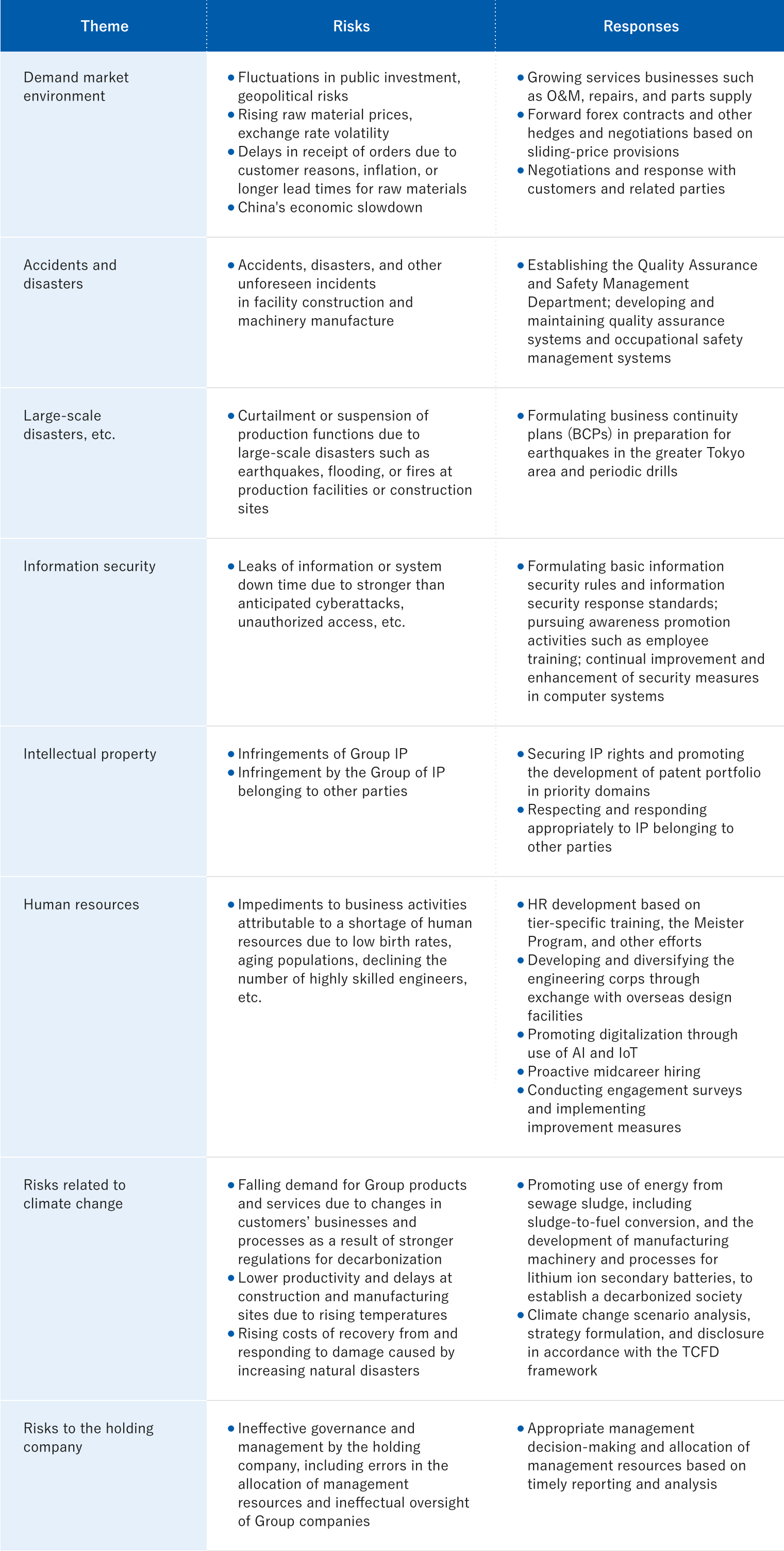
Major business risks and responses
The following presents examples of the principal risks identified by the Group through its risk management and various business activities, together with the measures taken to address them. For further details, please refer to the Securities Report.
有価証券報告書-第164期(2025/04/01-2026/03/31)
Information Security
To prevent information security incidents, the Group has established the Information Security Basic Regulations and Information Security Control Standards and implements information security measures from both human and system perspectives.
From the human perspective, the Group works to enhance employees’ awareness and knowledge of information security through training. From the system perspective, the Group seeks to minimize risks by continuously improving and strengthening security measures to address cyberattacks, unauthorized access, and other threats.
Regarding the use of AI, the Group has established guidelines for the use of generative AI and promotes its appropriate and responsible use, with due consideration for ethical aspects, through e-learning programs and training for executives and managers.